Welcome to KC Capital Partners Insights
Here, we share thoughtful updates and deep dives into real estate investing tailored for our valued partners and investors.
5/8/20243 min read
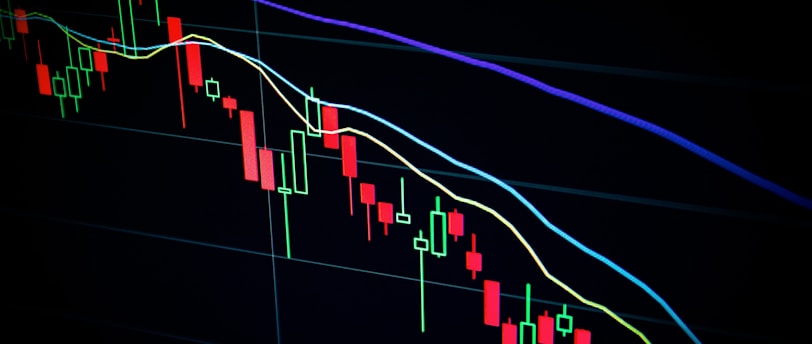

What’s Behind the Recent Stock Market and Crypto Sell-Off — and What Investors Should Take From It
Over the past several weeks, investors have watched both equity markets and cryptocurrencies pull back sharply, sparking renewed debate about whether this is the start of something bigger or simply another cycle doing what markets always do. Headlines have been loud, volatility has picked up, and sentiment has shifted from optimism to caution almost overnight.
For long-term investors, however, moments like these are less about panic and more about context, discipline, and positioning. Market corrections are not anomalies — they are features of the system. Understanding why they happen, how different assets behave under stress, and where opportunities may emerge is what separates reactive investors from strategic ones.
A Stock Market Built on Strong Gains Meets Reality
The recent decline in U.S. equity markets has been largely driven by valuation compression rather than an economic collapse. After an extended run-up — particularly in large-cap technology and AI-adjacent stocks — markets entered 2026 priced for near-perfect execution. Earnings growth was strong, enthusiasm was high, and risk premiums had narrowed.
What changed wasn’t one catastrophic event, but rather a series of realizations:
Expectations for AI-driven growth began to moderate as investors questioned timelines for profitability.
Economic data showed signs of cooling rather than acceleration.
Capital began rotating away from expensive growth stocks toward more defensive or value-oriented sectors.
When markets are priced aggressively, even slightly less good news can trigger meaningful pullbacks. This is exactly what we’ve seen. The sell-off has been most pronounced in tech-heavy indexes, while other sectors have held up comparatively better — a sign of rotation, not systemic failure.
In practical terms, this suggests the market is recalibrating, not unraveling.
Crypto’s Decline: A Familiar Cycle in a Volatile Asset Class
Cryptocurrency markets, which tend to magnify broader risk sentiment, have fallen alongside equities — and in typical fashion, by a greater magnitude. After a strong rally fueled by institutional inflows, ETF enthusiasm, and regulatory optimism, crypto prices moved ahead of sustainable demand.
As liquidity tightened and risk appetite faded, leverage unwound quickly. Forced liquidations accelerated declines, reinforcing a familiar pattern in digital assets: sharp upside, followed by sharp downside.
It’s important to remember that crypto markets are still structurally young. Price discovery is heavily influenced by sentiment, leverage, and momentum. When investors turn cautious, crypto is often one of the first assets to be sold — not necessarily because its long-term thesis has changed, but because it sits at the far end of the risk spectrum.
For disciplined investors, this reinforces a core principle: position sizing matters. Assets with higher volatility require stronger conviction and longer time horizons.
Why Stocks and Crypto Fell Together This Time
One of the most notable features of this downturn is the correlation between traditional markets and digital assets. While crypto was once promoted as an alternative or hedge, recent years have shown that in risk-off environments, correlations rise across asset classes.
When investors reduce exposure, they tend to sell what they can — not just what they want to. This dynamic is driven by:
Portfolio de-risking
Margin and leverage management
Institutional mandates to preserve liquidity
In other words, when uncertainty increases, diversification benefits often temporarily weaken. This is normal during corrections and usually reverses once markets stabilize.
What This Means for Long-Term Investors
Periods like this are uncomfortable — but they’re also where future returns are quietly set up. Historically, some of the best long-term investments are made not during euphoric peaks, but during moments of uncertainty when prices reset closer to fundamentals.
For investors with a long-term view, several takeaways stand out:
Corrections are healthy
Markets that only move upward become fragile. Pullbacks reset expectations, reduce excess leverage, and improve future return potential.Volatility is not risk — behavior is
Short-term price movement matters far less than long-term decision-making. Emotional reactions tend to do more damage than market declines themselves.Capital discipline creates opportunity.
Investors who maintain liquidity and patience during downturns are often best positioned when conditions improve.Real assets and cash-flowing investments shine in uncertainty
While public markets reprice daily, assets tied to cash flow, utility, and fundamentals often provide stability amid volatility.
Looking Ahead
No one can predict exactly when markets will bottom or how quickly sentiment will recover. What we do know is that market cycles repeat, risk premiums expand and contract, and capital ultimately flows back toward opportunity.
The current pullback in stocks and crypto reflects a reassessment of growth expectations — not the collapse of the global economy or financial system. For investors who remain disciplined, diversified, and focused on fundamentals, this period is less a warning sign and more a reminder of why strategy matters.
“Markets can remain irrational longer than you can remain solvent.”
— John Maynard Keynes, economist